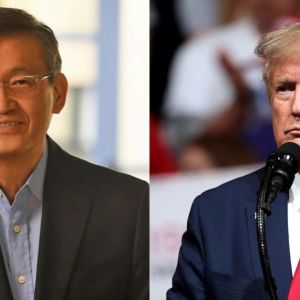
Lip-Bu Tan didn’t shake any hands in D.C. when he became CEO of Intel in March. The man had never met President Donald Trump. He wasn’t part of the tech leaders parade that flew in to make nice with the White House. But none of that mattered by August. Trump woke up angry, opened Truth Social, and posted : “The CEO of INTEL is highly CONFLICTED and must resign, immediately.” The attack came at 4:39 AM Washington time, and the target was a man with more than 600 investments in China, some allegedly tied to the military. Within weeks, Lip-Bu was in the Oval Office, flipping that insult into a $5.7 billion deal. The U.S. would become Intel’s largest shareholder . “Make Intel great again,” he said after the meeting, repeating Trump’s signature line, on camera no less. What happened in those 40 minutes changed everything for Intel. Tan used connections to flip the narrative Born in Muar, Malaysia, and raised by a newspaper editor dad and university warden mom, Lip-Bu built his life with a weird mix of physics, nuclear engineering, and venture capital, not exactly the usual recipe for leading one of America’s most broken chipmakers. Before his big sit-down with Trump, Lip-Bu called in favors. Microsoft’s Satya Nadella and Nvidia’s Jensen Huang spoke to Trump or his aides to vouch for him. Reuters alleges Lip-Bu also huddled with his team to craft a strategy: show his American loyalty, explain his Malaysian-Chinese roots, walk through his U.S. education, and address his China ties head-on. A spokesperson from Celesta Capital, one of Lip-Bu’s companies, confirmed it had made one China investment, exited in 2020. But Walden International and Walden Catalyst, his other firms, stayed silent. Intel’s own spokesperson claimed Lip-Bu had always engaged with Washington: “Lip-Bu Tan has a long, and well-established history of engagement in Washington, both before and after joining Intel.” Still, he had left Intel’s top government affairs role unfilled for months. The previous policy lead, a Democrat, had quit. Inside the Oval Office, Trump wasn’t alone. Commerce Secretary Howard Lutnick and Treasury Secretary Scott Bessent joined the meeting. Trump grilled Lip-Bu about Intel’s turnaround plan. A person familiar with the meeting alleged that Lip-Bu told them he didn’t want cash handouts from the CHIPS Act , even though Intel qualified for billions. Instead, when Trump floated the idea of the government getting equity in exchange for CHIPS Act money, Lip-Bu agreed. That turned into a $5.7 billion investment and a nearly 10% stake. Howard later said in a video, “Equity made the exchange fair.” Trump posted a fake image of himself watching Intel’s stock climb and wrote that the U.S. stake had already jumped 50% after the Nvidia partnership was announced. Inside Intel, Tan is cutting hard and fast Lip-Bu is not trying to be popular inside Intel. According to filings, he’s cutting 15% of Intel staff, mostly managers. He bypassed middle layers to speak directly with engineers. He made Pushkar Ranade, a long-time Intel engineer, his chief of staff and then interim CTO. Lip-Bu also kept one foot in his investment world. He still checks with his venture teams when Intel’s venture arm looks at deals, according to one former employee. Intel’s board clashed with him over one recent deal because of conflicts tied to his portfolio, Reuters reported. Intel updated his contract to require only “such time as is necessary,” unlike his predecessor’s full-time clause. Celesta Capital says his time with them is now “minimal.” Lip-Bu joined Intel’s board in 2022. When he took over as CEO, the company had about 100,000 workers and was bleeding money to build chip factories. That buildout had started under Pat Gelsinger, the previous CEO. Intel needed more than $20 billion to stay competitive in chip manufacturing. Sources allegedly said Lip-Bu called Amazon and Google to ask what kind of chips they needed. He even floated buying SambaNova, a startup that makes specialized AI chips, but some execs pushed back, saying the market favored general-purpose chips. Still, Intel says Lip-Bu is deep in the tech. “Lip-Bu is deeply involved in technical decisions, including product roadmaps,” the company said. “He’s helping to restore speed, accountability, and create an engineering-centric, customer-focused culture.” The U.S. bet gives Intel new leverage in the chip war The U.S. investment turned Intel into a political chip. Trump’s administration said, “The deal with Intel is one of many initiatives to reshore semiconductor and other critical manufacturing back to the United States.” That might not comfort foreign chipmakers who fear the U.S. will pressure buyers to work with Intel. Howard now picks up every call about Intel, and he believes that Americans “have skin in the game” for Intel’s foundry deals to succeed. Intel got more than just the White House check. In the same week, SoftBank, led by Masayoshi Son, announced a $2 billion investment. Lip-Bu had previously sat on SoftBank’s board. Intel’s 18A process, a next-gen manufacturing tech, still isn’t working well enough. Nvidia tested it but didn’t move forward, two sources said. “We are focused on collaborations,” Lip-Bu told reporters during the announcement of the Nvidia deal. Intel claims its next node, 14A, is on track and getting attention from customers. But Intel needs more than attention. It needs orders. Uncle Sam’s bet on Intel is both industrial policy and political gamble. But for now, it’s working: Intel’s stock is up 80% since Lip-Bu stepped in, outpacing the S&P 500 and even Nvidia.