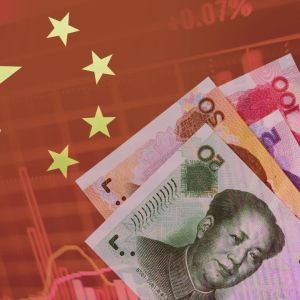
China offset its $456 billion liquidity pressure by having the PBoC inject nearly $87 billion to ward off the anticipated seasonal cash crunch during the Lunar New Year. The PBoC has also reduced its medium-term lending facility by 10 bps to 1.4%, down from January’s 1.5% to revive economic growth. The People’s Bank of China (PBoC) responded to the anticipated seasonal cash crunch ahead of the Lunar New Year by boosting the supply of money, with China’s Industrial Securities noting that the surge in cash demand followed a predictable trend in household behavior. The Chinese central bank is hoping to keep the financial plumbing well-greased to maintain economic momentum against intensifying headwinds. The PBoC is pulling out all the stops to revive China’s economy, charging some of its MLF lenders at a record-low 1.4%, down from 1.5% in January and 1.55% in December. However, it is not yet clear how many of the $165 billion MLF loans the central bank dished out in January were struck at the low rate. PBoC injection addresses estimated $461B liquidity gap According to media reports, last week’s PBoC’s injection of roughly $86.5 billion, coupled with the Industrial Securities’ projected addition of ~$504+ billion before the Lunar New Year festivities kicked off on Sunday (February 8), will address a $461.16 billion liquidity gap. The Chinese central bank expects surging withdrawals linked to holiday spending and corporate demand for the Yuan to drain funds from the banking system. “The central bank has ample room to roll over liquidity … It is expected that the PBOC can offset the funding gap by combining injections through conventional liquidity tools with a steady scale of bond purchases.” – Ming Ming , Chief Economist at Citic Securities While analysts from Huaxi Securities project a liquidity drain of about $130 billion from the traditional red envelope cash gifting and travel during the Lunar New Year celebrations, Ming Ming believes liquidity conditions in the bond market will remain steady enough to offset these changes in household behavior. However, some of the PBoC’s ~$58.4 billion reverse repos are also expected to mature later this week, draining more Yuan from banks. China is front-loading government bond sales, which may intensify the cash crunch, according to Guolian Mingsheng Securities. An outright reverse repo maturity could take out another $72 billion from Chinese banks. Local authorities to offload $137B of bonds before mid-February According to media reports, Chinese local authorities have revealed plans to sell roughly $136.9 billion (950B Yuan) of bonds in the first two weeks of February, representing nearly 18% more than January’s issuance. The PBoC is also expected to issue approximately $59.3 billion of bonds this month, reflecting its commitment to supporting the market during seasonal peaks. Meanwhile, although Chinese economists expect the PBoC to slash banks’ reserve requirement ratio by at least 50 basis points (bps) and cut interest rates this year, Sinolink Securities still believes exporters converting earnings from the U.S. dollar to the Yuan will further tighten liquidity. However, this week’s inflation data will help guide expectations for how much the PBoC will contribute to policy support for the Chinese economy. On the other hand, analysts from Huachuang Securities note that the Chinese central bank’s tendency to keep liquidity in check should be the last thing the markets need to worry about this year. They observe that the cash supply “still feels very loose” despite volatility in repo rates driven by seasonal factors. Zou Lan, the PBoC’s deputy governor, also said last month that interest margins have been showing signs of stabilizing in recent years. He further observed that cheaper loans from China’s central bank would not only benefit commercial lenders that have long suffered narrower margins, but they also favor an economy sunk in a prolonged property slump and deflationary pressure. Meanwhile, Cryptopolitan previously reported that China’s ability to navigate this economic transition effectively also hinges on maintaining a steady flow of funds from overseas investments. Chinese policymakers are also taking steps to steady the economy through strategies aimed at restoring investor confidence in the Yuan. Want your project in front of crypto’s top minds? Feature it in our next industry report, where data meets impact.