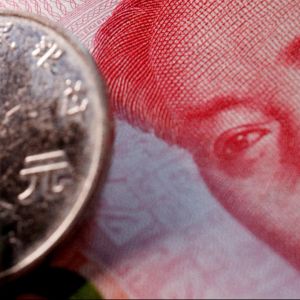
Regulators in China are pushing for the revision of the People’s Bank of China Law, arguing that the 2003 law cannot keep up with the needs of modern technology. A deputy at the National People’s Congress, Fu Xiguo, submitted a formal request during the 2026 sessions to officially declare the digital yuan as legal tender. Meanwhile, Hong Kong is expected to issue its first batch of stablecoin licenses to no more than four companies, as mainland China and Hong Kong focus on different angles to tackle the fiat-linked digital currency question. Will China officially make the digital yuan legal tender? During the 2026 National People’s Congress (NPC) and Chinese People’s Political Consultative Conference (CPPCC) sessions, Fu Xiguo, a deputy to the NPC and former head of the People’s Bank of China (PBoC) Liaoning branch, submitted a formal request to speed up the revision of the Law of the People’s Bank of the People’s Republic of China. The current law was last revised in 2003. Fu Xiguo’s argument is that the 2003 law cannot address the needs of the modern economy. In 2003, mobile payments and blockchain technology did not exist in the public sphere. The deputy pointed out that the current legal framework does not clearly define the digital yuan as legal tender. Making the e-CNY legal tender by law would ensure that all individuals and businesses will accept it for payments, just like physical banknotes and coins. During the 2023 Central Financial Work Conference, building a modern central banking system was proposed. Official data from the PBoC shows that the digital yuan is already being used in various sectors, including retail, transportation, and government services. However, its use has largely relied on administrative orders and pilot programs rather than formal national law. Hong Kong’s strict stablecoin licensing Recent reports state that the Hong Kong Monetary Authority (HKMA) plans to release the first batch of stablecoin licenses shortly after the 2026 Two Sessions in Beijing. The HKMA received applications from 36 different institutions, but sources indicate that the first batch of licenses will be very small, likely fewer than four. RD Technologies, former HKMA Chief Executive Norman Chan Tak-lam’s firm, was part of the testing process, but it may not be included in this very first batch of licensees. During the Two Sessions, Ding Xuexiang, Vice Premier of the State Council in charge of Hong Kong and Macao affairs, met with delegates to discuss the city’s role. He specifically mentioned that emerging industries like virtual assets and artificial intelligence (AI) are developing rapidly. These technologies usher in financial development, but they also present significant risks to financial security. Ding Xuexiang, using a metaphor of the spear and shield, suggested that the government must use technology for growth (the spear) while simultaneously building defenses (the shield) to protect the economy. Hong Kong’s financial security directly impacts the financial stability of the entire country. By limiting the number of stablecoin licenses, the HKMA ensures that it can closely monitor each issuer and prevent the kind of market volatility seen in global stablecoin crashes in previous years. Don’t just read crypto news. Understand it. Subscribe to our newsletter. It's free .