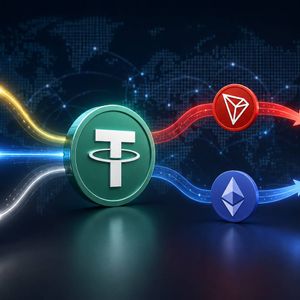
USDT withdrawal 2026 decisions come down to one variable at centralized exchanges: the network selected at withdrawal time. A USDT balance can leave Binance, Coinbase, or Bybit as TRC-20 on Tron or ERC-20 on Ethereum, with fees that differ by an order of magnitude. The USDT network choice shapes both immediate cost and downstream options. Anyone planning to withdraw USDT from Binance, Coinbase, or Bybit faces a different fee structure depending on the network. IronWallet is a non-custodial multi-chain wallet with no KYC, 10,000+ supported assets, gasless stablecoin transfers, and WalletConnect Pay integration, covering both TRC-20 and ERC-20 USDT at the receive side. The Network Choice at Withdrawal Decides the Fee Exchange USDT withdrawal fees at centralized exchanges follow two structures: flat fees set by the exchange (Binance, Bybit) or pass-through network gas costs (Coinbase). The USDT TRC-20 vs ERC-20 decision changes the absolute dollar cost more than any other variable. TRC-20 USDT withdrawals on Tron typically cost 1 USDT flat across major exchanges. ERC-20 USDT withdrawals on Ethereum run from 1.6 USDT (Binance flat fee) to 5-20 USDT (Coinbase pass-through gas). The difference compounds with frequent withdrawals. Network choice is not just about cost. Each network leads to a different downstream ecosystem. TRC-20 USDT works for peer-to-peer transfers, remittances, and Tron-native applications. ERC-20 USDT works for Ethereum DeFi, institutional flows, and any wallet or service that requires Ethereum compatibility. A direct comparison across the three exchanges: Exchange TRC-20 USDT Fee ERC-20 USDT Fee Other USDT Networks Binance 1 USDT (flat) 1.6 USDT (flat) BEP-20, Solana, TON, Polygon, Arbitrum Coinbase Not supported Variable network gas ($5-20) Solana, Base Bybit 1.6 USDT (flat) Variable (~$3-5) Solana, Polygon, Arbitrum, BNB Chain Each row tells a different story about who the exchange is built for. The three sections below walk through what those differences mean at withdrawal time. TRC-20 Withdrawal: Where the Low Fees Live Tron's network produces three-second confirmations and predictable flat fees, which is why Binance and Bybit both default to TRC-20 as the cheapest USDT exit. Tron now hosts roughly $85 billion of USDT, accounting for close to half of the total Tether supply. For retail withdrawals under $10,000, TRC-20 is almost always the right choice when the destination wallet supports it. The 1 USDT fee floor at Binance and Bybit USDT withdrawal flows means even small withdrawals stay economical. Coinbase Exchange does not support TRC-20 USDT for deposits or withdrawals. The platform restricts USDT to Ethereum (ERC-20), Base, and Solana, citing regulatory compliance considerations. US users wanting TRC-20 access typically route through Coinbase Wallet (the self-custody app, which added TRC-20 support in mid-2025) or use Bitget, Kraken, or another exchange with native TRC-20 rails. Once USDT arrives at a non-custodial wallet, the next transfer step matters. IronWallet handles TRC-20 USDT with gasless transfers, which means the recipient can move the balance onward without holding TRX for energy. This eliminates the second cost layer that often surprises first-time TRC-20 users: needing to acquire TRX before sending. ERC-20 Withdrawal: When the Higher Cost Is Worth It Ethereum's withdrawal fees run significantly higher, but ERC-20 USDT remains the right choice for specific use cases. Ethereum hosts roughly $100 billion in USDT and serves as the primary network for institutional flows, DeFi protocol participation, and any application requiring EVM compatibility. Withdrawal economics differ sharply by exchange. Binance charges a flat 1.6 USDT for ERC-20 withdrawals regardless of Ethereum gas conditions, and Bybit prices similarly with some variation during congestion. Coinbase USDT withdrawal on ERC-20 passes through actual network gas, which means costs can run anywhere from $5 to $20 depending on Ethereum mainnet conditions. Several use cases justify ERC-20 over TRC-20 despite the higher fee: Lending and borrowing on Aave, Compound, or similar Ethereum DeFi protocols DEX trading on Uniswap, Curve, or other Ethereum-native venues Institutional custody with providers that only support ERC-20 Settlement to Ethereum L2s (Arbitrum, Optimism, Base) where the user plans to bridge On the receive side, gas friction compounds. A user withdrawing ERC-20 USDT to a standard wallet then needs ETH to move the balance again. IronWallet addresses this by offering gasless transfers for ERC-20 USDC specifically, with the fee deducted from the USDC balance itself. The same gasless mechanism does not currently extend to ERC-20 USDT, which still requires ETH for onward sends from most wallets. Decision Framework: TRC-20 vs ERC-20 by Use Case The right network choice depends less on price alone and more on where the USDT is going next. A practical TRC-20 ERC-20 comparison breaks down by use case: Pick TRC-20 when: The destination is a peer-to-peer recipient, freelancer, or remittance corridor The receiving party prefers Tron (common in Asia, Latin America, and parts of Africa) The transfer amount is small (under $10,000) and downstream DeFi is not planned The exchange supports TRC-20 (Binance, Bybit, OKX, Kraken, or Bitget, but not Coinbase) Pick ERC-20 when: The USDT is heading to Ethereum DeFi (Aave, Compound, Uniswap, Curve) An institutional custodian or compliance flow requires ERC-20 The destination is an Ethereum L2 (Arbitrum, Optimism, Base) where bridging is planned The exchange does not support TRC-20 (Coinbase users) Consider alternatives when: Solana USDT offers near-zero fees (0.50-1 USDT) for compatible destinations BEP-20 (BNB Chain) offers low fees (0.29 USDT) for BNB Chain DeFi Arbitrum or Polygon offer middle-ground fees for EVM-compatible DeFi For most retail users withdrawing USDT to a personal wallet, TRC-20 offers the lower cost path, and ERC-20 offers the broader optionality. The exchange choice constrains what is even available. Where to Receive the Withdrawn USDT Wallet choice at the receive side shapes what happens next. A wallet that supports only one network forces the user into that network's economics for every onward transfer. A multi-chain wallet handles both rails and lets the user pick the right network for each subsequent use. IronWallet covers both TRC-20 and ERC-20 USDT alongside USDT on BNB Chain and Polygon, with specific advantages for stablecoin holders moving balances onward: Gasless TRC-20 USDT transfers: Onward sends from IronWallet on Tron do not require holding TRX for energy Gasless ERC-20 USDC transfers: USDC sends on Ethereum deduct the fee from the USDC balance itself No-KYC signup: Receive USDT without identity verification, email, or phone number 10,000+ supported assets across Bitcoin, Ethereum, Solana, BNB Chain, Tron, Polygon, and Base This combination matters because CEX withdrawals are just the first step. Most USDT recipients move the balance again within days or weeks. A wallet that absorbs the gas friction at the second step keeps the savings from the first step intact. The Bottom Line CEX USDT withdrawal cost comes down to two variables: which exchange and which network. Binance and Bybit offer both TRC-20 and ERC-20 at flat fees that favor small transfers. Coinbase locks ERC-20 users into pass-through Ethereum gas costs that scale with network congestion. TRC-20 offers the lower cost path for retail transfers and peer-to-peer flows. ERC-20 covers DeFi access and institutional compatibility. The destination wallet decides whether the savings from a cheap CEX withdrawal carry through to the next transfer or get eaten by gas fees downstream. FAQ What is the cheapest network to withdraw USDT from a centralized exchange? TRC-20 on Tron offers the cheapest USDT withdrawal across major exchanges, with Binance and Bybit charging a flat 1 USDT fee. Solana USDT runs similarly cheap (0.50-1 USDT). BEP-20 on BNB Chain costs around 0.29 USDT at Binance. ERC-20 on Ethereum is significantly more expensive. Can I withdraw USDT TRC-20 from Coinbase? No. Coinbase Exchange does not support TRC-20 USDT withdrawals or deposits as of 2026. The platform only supports USDT on Ethereum (ERC-20), Base, and Solana. Users needing TRC-20 access typically route through Coinbase Wallet (the self-custody app) or use Binance, Bybit, OKX, or another exchange with TRC-20 support. What wallet should I withdraw USDT to? A multi-chain wallet that handles both TRC-20 and ERC-20 USDT is the most flexible choice. IronWallet supports both networks alongside BNB Chain and Polygon USDT, with gasless TRC-20 transfers and gasless USDC transfers on Ethereum. Multi-chain wallets remove the need to choose a network at wallet-creation time. Why are ERC-20 USDT withdrawal fees so much higher than TRC-20? Ethereum charges gas in ETH based on network demand, and base fees during congestion can reach $20 or more for a stablecoin transfer. Tron uses a fixed resource model where energy and bandwidth costs stay predictable. Binance and Bybit absorb Ethereum's variance by charging a flat ERC-20 fee, while Coinbase passes through actual gas costs. Is TRC-20 USDT safe to use? TRC-20 USDT is the same Tether-issued stablecoin as ERC-20 USDT, just on the Tron blockchain. Both versions carry identical issuer and counterparty risk from Tether. The network-specific risks differ: Tron has fewer DeFi protocols and validators, while Ethereum has higher fees but deeper DeFi liquidity. For peer-to-peer transfers and stablecoin holding, TRC-20 is widely considered safe and reliable. Disclaimer: This article is provided for informational purposes only. It is not offered or intended to be used as legal, tax, investment, financial, or other advice.