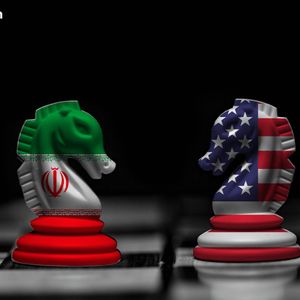
Crude oil markets are bracing for extreme volatility after Iran’s navy moved to close the Strait of Hormuz, choking a waterway that handles roughly 20% of global oil flows. The announcement triggered an immediate reaction in on‑chain markets: on Hyperliquid, crude oil futures jumped about 6% within hours as traders rushed to price in the risk of a prolonged supply disruption. The aggressive move on decentralized derivatives effectively front‑runs the stress that is likely to hit benchmark Brent and WTI contracts once traditional markets fully reopen. Hormuz Shutdown Threatens Global Supply The Strait of Hormuz is the narrow chokepoint linking the Gulf to the Arabian Sea, and it is critical for exports from Saudi Arabia, the UAE, Kuwait, Qatar and Iraq. Any attempt by Iran’s Revolutionary Guards to restrict tanker passage there instantly raises the specter of a global energy shock. Even a partial disruption of traffic could push crude well above recent multi‑month highs, while a multi‑day full closure would risk sending prices into levels that standard risk models struggle to capture. For import‑dependent economies, especially in Asia and Europe, the scenario raises the prospect of higher inflation, weaker growth and renewed pressure on central banks. Oil Futures Jump on War Risk Ahead of the latest escalation, oil had already been grinding higher as markets priced in the possibility of US–Iran confrontation spilling into energy infrastructure. Iran’s move around Hormuz has supercharged that trend. Hyperliquid’s crude futures spiking 6% reflects traders hedging against a potential 10-20 USD gap higher in major benchmarks if no de‑escalation emerges before the next full trading session. In thin weekend liquidity, relatively modest order flow can drive outsized moves, but the direction is clear: the war premium is being rapidly built into forward pricing. On‑chain derivatives thus provide a live barometer of fear while centralized exchanges are closed. What Comes Next The outlook hinges almost entirely on the conflict trajectory. If Iran’s closure proves brief or largely symbolic, tanker flows could resume with only a temporary premium embedded in prices, allowing crude to stabilize after the initial spike. A prolonged shutdown or further strikes on energy infrastructure, however, would likely force refiners and importers to scramble for alternative supplies, amplifying both price spikes and intraday volatility. For now, both traditional and crypto‑native oil traders are treating Hormuz as a central risk factor, and wide swings in crude: on‑chain and off‑chain should be expected as each new headline redraws the balance between fear and de‑escalation hopes.