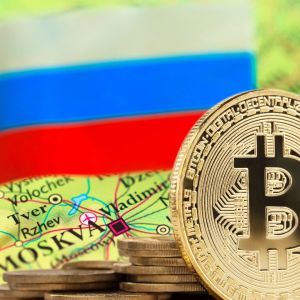
Russian authorities may permit the quite popular peer-to-peer trading of cryptocurrencies under the country’s upcoming rules for digital-asset transactions. This is one of several proposals aimed at liberalizing the restrictive draft law currently under review, which also includes expanding the list of greenlighted coins. Russian lawmakers push for liberal crypto regulation Legalizing peer-to-peer (P2P) crypto deals Expanding the list of cryptocurrencies approved for trading Raising the investment limit for ordinary Russians These are the key amendments recently suggested in the State Duma, which is still considering the country’s new law “On Digital Currency and Digital Rights.” The full set of proposed changes has been sent to the Ministry of Finance by the Financial Markets Committee at the lower house of the parliament in Moscow. They were presented by Dmitry Novikov, member of the right-wing nationalist Liberal Democratic Party of Russia (LDPR), the Interfax news agency reported Friday, citing a knowledgeable source. The move comes ahead of the second reading of the bill designed to comprehensively regulate operations with crypto assets in the Russian Federation. The legislation, which overcame its first parliamentary hurdle last month, must be adopted and enforced by July 1, 2026, at the latest. Based on a regulatory concept announced by Russia’s conservative central bank in December, it has attracted criticism for being overly restrictive. Russians may be allowed to swap crypto for cash According to the provisions passed in April, Russian residents will be able to legally purchase cryptocurrencies exclusively through licensed intermediaries. These include exchanges, brokers, and trustees registered with and authorized by the Central Bank of Russia ( CBR ) as providers of crypto-related services. One of the amendments now submitted to the Finance Ministry envisages allowing the trading of digital currency for fiat cash between private citizens. The main motive of its sponsor is: “The current version prohibits payment for goods and services with cryptocurrency, but does not regulate the direct P2P exchange of cryptocurrency for cash between individuals. The amendment legalizes such trades as an exception to the general prohibition.” What’s more, the bulk of cryptocurrency purchases currently made by Russian citizens occur through P2P transactions, highlighted Novikov, also quoted by the crypto news outlet Bits.media. According to an estimate announced by Deputy Minister of Finance Ivan Chebeskov in February, the daily volume of Russian crypto transactions is around 50 billion rubles (over $685 million). The lawmaker also proposes to allow the withdrawal of digital assets to self-custody wallets, which is not permitted by the current version of the legislation. He argued: “Without the ability to withdraw to non-custodial wallets, the owner’s right to dispose of their property is effectively limited.” More cryptocurrencies to be approved for trading The Russian deputy further suggests providing separate definitions for cryptocurrencies and stablecoins, as the collective “digital currency” does not reflect the specifics of each category. Then, he also calls for expanding the list of cryptocurrencies admitted to the regulated Russian market for purely practical reasons. The current strict criteria limit the assets that can be circulated to only a few major coins of the caliber of Bitcoin (BTC) and Ethereum (ETH). These are the ones with a market cap exceeding 5 trillion rubles (over $60 billion) for the past two years, daily trading volume averaging over 1 trillion rubles (approx. $12 billion) and trading history of at least five years. Russia’s whitelist should include TRON (TRX) and Solana (SOL), for example, to allow those who buy or transfer stablecoins to be able to pay the fees on the respective network in its native token. While the regulatory framework expands access to crypto assets by including non-qualified investors, it limits their purchases to no more than 300,000 rubles a year (around $4,000). Dmitry Novikov and his colleagues want the threshold raised to 600,000 rubles per month, a significant increase to an annual 7.2 million rubles, or almost $99,000 at the current exchange rate. Their proposals come after Russian bankers pitched their own ideas on how to liberalize the digital currency law, as reported by Cryptopolitan last month, urging similar changes. Don’t just read crypto news. Understand it. Subscribe to our newsletter. It's free .