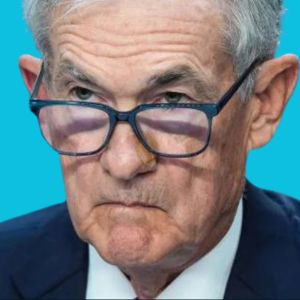
Volatility in the Treasury market has dropped to some of its lowest levels in years, bring about a calm sentiment on the floor, but traders are waiting for Federal Reserve Chair Jerome Powell to speak at the upcoming press conference later today, as he can make or break the current calm in a single sentence. The situation comes at a time when policymakers at the Fed are split over the path of interest rates. Some policymakers see room to cut because the labor market is losing momentum, while others see their core measure of inflation (CPI) still above target, meaning holding steady is appropriate. The 10‑year Treasury yield was holding around 3.98% in Asia on Wednesday, while the two‑year yield was near 3.49%. If Powell sounds even slightly more hawkish than expected, traders say yields could jump above 4%. Higher yields mean higher borrowing costs across the U.S. economy. That would impact everything from government financing to mortgages to corporate debt at a moment where growth and inflation remain unpredictable. Powell’s remarks may test the market’s calm Scott DiMaggio, head of fixed income at AllianceBernstein, said the market has already priced in most of the expected rate moves: “There’s a lot priced in for the Fed for the next 14 months and if there is any blip that can probably back up yields 25 to 30 basis points.” He added that technical levels suggest the 10‑year could reach 4.25% if sentiment turns. For now, yields have stayed in a narrow range because the government shutdown has limited the release of fresh economic data. Without new data, investors have little to react to. The ICE BofA Move Index, which tracks Treasury volatility, is near levels last seen during the pandemic. David Chao, global market strategist at Invesco Asset Management, said, “Caution is warranted for Treasuries trading.” Chao noted that the labor market has softened enough to justify some easing but said he does not see a guarantee that cuts will continue. Some traders, however, see room for Treasuries to outperform into the end of the year. Yields around 4% appear attractive to buyers looking for stability, especially as the U.S. trade war environment weighs on broader risk sentiment. Future cuts would add more support. Neil Sutherland, portfolio manager at Schroder Investment Management, said growth may pick up next year, which could create more caution among investors. But he added that with this year’s cuts already in motion, “we still think the point of least resistance is lower rather than higher yields.” Yield curve signals face unusual economic conditions Since the end of the pandemic, the U.S. economy has handled major disruptions: rapid inflation, aggressive tightening, a regional banking crisis, the ongoing trade confrontation abroad, and now a government shutdown. Yet the economy has continued expanding. The Atlanta Fed’s GDPNow model currently estimates growth near a 4% annualized pace. Campbell Harvey, the Duke University professor who first linked yield curve inversions to recession probabilities, said this cycle may be different. He pointed to strong household and corporate finances, sustained government spending, and investment tied to artificial intelligence. “Massive fiscal spending – that’s so different historically,” Harvey said. “That’s fairly unusual.” The yield curve inversion began in October 2022. Historically, recessions have followed an inversion by roughly 11 months. After the collapse of Silicon Valley Bank in May 2023, the gap between 10‑year yields and 3‑month yields widened to more than 1.8 percentage points, the deepest since 1981. The curve turned slightly positive in December when the Fed began cutting. Usually that move signals recession is close, because the Fed is trying to support growth. But that signal did not hold. The Fed stopped cutting as 2025 began and only resumed last month because both the economy and inflation continued to run stronger than expected. “The yield curve predicted the last eight recessions,” Harvey said . “At some point it’s going to deliver a false signal. But eight out of nine is pretty good.” Get $50 free to trade crypto when you sign up to Bybit now