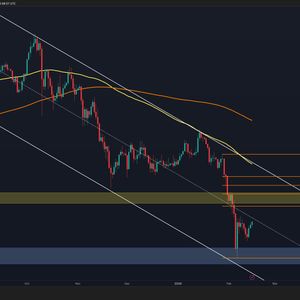
BitcoinWorld XRP Price Plunge: Massive Upbit Sell-Off Triggers 16% Weekend Correction In a dramatic weekend market movement, XRP experienced a significant 16% price correction after failing to break its $1.66 resistance level, with blockchain analysts identifying a concentrated sell-off on South Korea’s Upbit exchange as the primary catalyst for the sudden downturn. This development, reported on March 23, 2025, highlights how regional trading activity can create substantial ripple effects across global cryptocurrency markets, demonstrating the interconnected nature of digital asset exchanges worldwide. XRP Price Drop Analysis: The Upbit Connection Crypto analyst Dom provided crucial insights into the weekend’s market dynamics, revealing that the XRP price drop directly correlated with extraordinary selling pressure on Upbit. Specifically, the exchange recorded a net sale exceeding 50 million XRP tokens within a compressed 15-hour window. This concentrated selling activity created immediate downward pressure on XRP’s market valuation, ultimately triggering the broader 16% correction that affected traders across multiple platforms and regions. Market data reveals a striking contrast between exchange behaviors during this period. While major global platforms like Binance and Coinbase maintained relatively stable buy-sell balances, Upbit’s spot Cumulative Volume Delta (CVD) indicator experienced a dramatic plummet. The CVD metric, which tracks the difference between buying and selling volumes, serves as a reliable gauge of market sentiment and order flow direction. Consequently, Upbit’s negative CVD reading strongly indicated sustained selling pressure that eventually overwhelmed buying support across the broader XRP market. Cryptocurrency Market Mechanics and Regional Influences The South Korean cryptocurrency market possesses distinct characteristics that frequently create price disparities compared to global exchanges. Commonly called the “Kimchi Premium,” this phenomenon describes how digital assets sometimes trade at higher prices on Korean exchanges due to strong local demand, regulatory differences, and capital flow restrictions. However, the recent XRP situation demonstrates how concentrated selling on a major regional exchange can conversely create downward pressure that spreads internationally. Several factors make Upbit particularly influential in Asian cryptocurrency markets: Market Position: Upbit ranks among South Korea’s largest and most regulated cryptocurrency exchanges Trading Volume: The platform consistently handles substantial daily trading volumes across multiple digital assets Retail Participation: South Korea maintains one of the world’s highest cryptocurrency adoption rates among retail investors Regional Leadership: Upbit often sets price trends that other Asian exchanges subsequently follow This market structure explains why selling pressure originating on Upbit can rapidly propagate to other trading venues. As arbitrage traders detect price discrepancies between exchanges, they execute simultaneous buy and sell orders across platforms to capture profit opportunities. This arbitrage activity effectively transmits price movements from one exchange to another, creating the interconnected market behavior observed during the XRP correction. Timing and Execution Patterns of the Sell-Off Blockchain analysts identified precise timing patterns in the selling activity that provide crucial context for understanding market dynamics. The most concentrated selling pressure occurred between 11:00 p.m. and 3:00 a.m. UTC, with approximately 2,500 sell orders placed per minute during peak intervals. This timing corresponds with the late evening and early morning hours in South Korea, suggesting coordinated or algorithmically-driven trading activity rather than random retail selling. The investigation into trading patterns yielded particularly significant findings regarding market manipulation. Analysis revealed that wash trading—the practice of simultaneously buying and selling assets to create artificial volume—accounted for less than 0.07% of the total activity. This minimal wash trading percentage strongly indicates that the sell-off originated from genuine market participants, whether institutional investors, large retail holders, or algorithmic trading systems executing legitimate strategies. XRP Market Activity Analysis: March 22-23, 2025 Metric Measurement Significance Price Decline 16% correction Failed breakout above $1.66 resistance Selling Volume 50+ million XRP Concentrated on Upbit exchange Time Window 15 hours Peak between 11 p.m.-3 a.m. UTC Sell Order Rate 2,500/minute During maximum pressure period Wash Trading Indicates genuine market activity Technical Indicators and Market Sentiment Shifts The Cumulative Volume Delta (CVD) indicator played a crucial role in identifying the source of selling pressure. This advanced metric calculates the cumulative difference between buying and selling volumes at specific price levels, providing clearer insight into whether buyers or sellers control market direction. Upbit’s sharply negative CVD reading contrasted markedly with relatively neutral readings on other major exchanges, pinpointing the origin of the downward pressure with unusual precision. Market technicians monitor several key indicators when analyzing cryptocurrency price movements: Order Book Depth: Measures available buy and sell orders at different price levels Volume Profile: Analyzes trading activity at specific price points over time Liquidity Distribution: Tracks where market participants place their orders Market Microstructure: Examines the mechanics of how trades execute These analytical tools collectively revealed that while XRP approached its $1.66 resistance level with apparent strength, underlying market structure vulnerabilities existed beneath the surface. The concentrated selling on Upbit exposed these weaknesses, triggering stop-loss orders and algorithmic responses that amplified the initial downward movement into a full-scale correction affecting the entire XRP market. Historical Context and Comparative Analysis This weekend’s XRP price action finds parallels in previous cryptocurrency market events where regional selling pressure created broader impacts. In January 2023, similar concentrated selling on Asian exchanges preceded a 22% Bitcoin correction. Likewise, in September 2024, Ethereum experienced a 14% decline following substantial selling on a single derivatives exchange. These historical precedents demonstrate how modern cryptocurrency markets remain susceptible to liquidity events originating from specific trading venues or regions. The global cryptocurrency market’s continuous 24/7 trading cycle creates both opportunities and vulnerabilities. While traders can execute positions at any hour, this constant operation means liquidity varies significantly across different time zones and trading sessions. The XRP sell-off’s timing during lower global liquidity hours likely amplified its impact, as fewer market participants were actively providing buy-side support to absorb the selling pressure. Regulatory Environment and Market Implications South Korea’s evolving cryptocurrency regulatory framework adds important context to understanding exchange dynamics. The country has implemented increasingly stringent regulations following the 2022 Terra-Luna collapse, including enhanced investor protection measures, stricter exchange requirements, and improved market surveillance capabilities. These regulatory developments have shaped how Korean exchanges operate and how market participants approach trading decisions. The minimal wash trading percentage (under 0.07%) detected during the XRP sell-off suggests several possibilities about its origin: Institutional Rebalancing: Large holders adjusting portfolio allocations Risk Management: Responses to changing market conditions or news events Technical Factors: Algorithmic trading systems reacting to specific triggers Regional Developments: Korea-specific factors affecting investor sentiment Market analysts continue investigating whether specific events or announcements triggered the concentrated selling. While no single catalyst has been definitively identified, the coordinated timing and execution patterns suggest informed decision-making rather than random or emotional trading behavior. This distinction matters significantly for understanding market efficiency and the sophistication of participants driving major price movements. Conclusion The XRP price drop during the March 22-23 weekend provides a compelling case study in modern cryptocurrency market dynamics, demonstrating how concentrated selling activity on a single major exchange can trigger broader market corrections. The 16% decline following XRP’s failed attempt to break the $1.66 resistance level originated from substantial selling pressure on South Korea’s Upbit exchange, where over 50 million XRP tokens were sold within 15 hours. This event underscores the interconnected nature of global cryptocurrency markets and highlights the importance of monitoring regional exchange activity alongside broader market indicators. As digital asset markets continue maturing, understanding these complex relationships between different trading venues, time zones, and participant behaviors will remain essential for traders, analysts, and investors navigating cryptocurrency volatility. FAQs Q1: What caused XRP’s price to drop over the weekend? The primary cause was concentrated selling pressure on South Korea’s Upbit exchange, where over 50 million XRP tokens were sold within a 15-hour window, creating downward momentum that spread to other exchanges. Q2: How did analysts determine Upbit was the source of selling pressure? Analysts used the Cumulative Volume Delta (CVD) indicator, which showed a dramatic negative reading on Upbit while other major exchanges like Binance and Coinbase maintained relatively stable buy-sell balances. Q3: Was this sell-off due to market manipulation or wash trading? Investigation revealed wash trading accounted for less than 0.07% of activity, indicating the selling came from genuine market participants rather than manipulative trading practices. Q4: Why does selling on one exchange affect the entire XRP market price? Arbitrage traders quickly exploit price differences between exchanges, buying where prices are lower and selling where they’re higher. This activity transmits price movements across trading venues, creating market-wide impacts. Q5: What time did most of the selling activity occur? The peak selling pressure happened between 11:00 p.m. and 3:00 a.m. UTC, with approximately 2,500 sell orders placed per minute during the most active periods. This post XRP Price Plunge: Massive Upbit Sell-Off Triggers 16% Weekend Correction first appeared on BitcoinWorld .