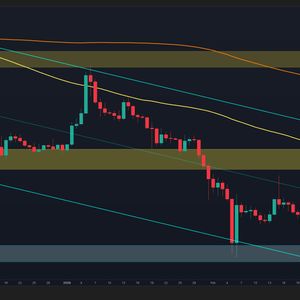
BitcoinWorld GBP/JPY Forecast: Critical 20-Day EMA Breakdown Signals Alarming Downside Risk LONDON, April 2025 – The GBP/JPY currency pair, a key barometer of risk sentiment between the UK and Japan, now flashes a critical technical warning. A sustained break below its 20-day Exponential Moving Average (EMA) solidifies a bearish outlook, prompting analysts to reassess near-term trajectories for the volatile cross. This development occurs against a complex backdrop of shifting central bank policies and global economic recalibration. GBP/JPY Forecast: Decoding the 20-Day EMA Breakdown The 20-day Exponential Moving Average serves as a vital short-term trend filter for forex traders. Consequently, a price consistently trading below this level often signals mounting selling pressure. For GBP/JPY, the breach and subsequent failure to reclaim the 20-day EMA marks a significant shift in momentum. Historically, such breaks have preceded extended corrective phases. The pair’s inability to find support at this dynamic level suggests underlying weakness may be more structural than previously anticipated. Therefore, market participants are now closely monitoring subsequent support zones. Technical Structure and Key Price Levels Technical analysis reveals a clear hierarchy of support and resistance. The failed 20-day EMA now acts as immediate overhead resistance. Below the current price, traders identify several historical support levels that could halt the decline. A break below the recent swing low would likely accelerate selling, targeting the 50-day Simple Moving Average. Furthermore, momentum indicators like the Relative Strength Index (RSI) are trending towards oversold territory, yet they have not yet reached extreme levels that would suggest an imminent reversal. This technical configuration supports a cautious, bearish bias in the short term. GBP/JPY Key Technical Levels (April 2025) Level Type Significance 20-day EMA Resistance Immediate trend barrier; must be reclaimed for bullish reversal. Recent Swing Low Support Critical short-term floor; breach confirms downside momentum. 50-day SMA Support Medium-term trend indicator; a key target for bearish moves. 200-day SMA Support Major long-term trend line; ultimate bearish objective. Fundamental Drivers Behind the Pressure The technical breakdown aligns with evolving fundamental narratives. The Bank of England’s (BoE) communicated path for interest rates appears increasingly data-dependent, with recent inflation prints causing uncertainty. Conversely, the Bank of Japan (BoJ), while cautiously normalizing policy, maintains a fundamentally accommodative stance relative to other major central banks. This divergence creates a complex push-pull dynamic. Additionally, global risk appetite, often measured by equity market performance, directly influences the yen’s status as a traditional safe-haven currency. A deterioration in risk sentiment typically boosts the JPY, adding further pressure to GBP/JPY. Historical Context and Comparative Analysis Examining past instances where GBP/JPY broke below its 20-day EMA provides valuable context. For example, during the market volatility of late 2023, a similar breakdown preceded a 5% correction over the following month. However, the macroeconomic environment today differs substantially. Analysts at major financial institutions, including insights referenced from Standard Chartered and Nomura, emphasize that current moves must be filtered through the lens of relative economic growth forecasts and trade flow data. The UK’s current account deficit versus Japan’s surplus remains a persistent structural factor weighing on the pair during periods of global uncertainty. Market microstructure also plays a role. The following factors are currently influencing order flow: Carry Trade Unwind: Higher volatility reduces the appeal of funding in JPY to buy higher-yielding GBP assets. Hedging Activity: Corporates and institutional investors increase JPY hedges amid uncertainty. Algorithmic Response: Systematic trading models often initiate sells upon confirmed breaks of key EMAs. Risk Management Considerations for Traders Given the confirmed bearish bias, prudent risk management becomes paramount. Traders considering short positions often look for rallies towards the broken 20-day EMA as potential entry points, placing stops above the level. Conversely, long-term investors viewing the dip as a buying opportunity may employ a dollar-cost averaging strategy, accumulating positions at defined lower support levels. Position sizing should account for the pair’s known volatility, which typically exceeds that of major dollar-based pairs. Importantly, no single indicator guarantees direction; the 20-day EMA signal must be corroborated by price action at higher-timeframe supports and fundamental developments. Conclusion The GBP/JPY forecast now carries a distinct downside bias following its decisive break below the 20-day Exponential Moving Average. This technical development, supported by a nuanced fundamental backdrop of policy divergence and risk aversion, suggests further weakness is probable in the near term. Traders should monitor key support levels for potential consolidation or breakdown, while incorporating robust risk management protocols. The evolving dialogue between the Bank of England and the Bank of Japan will ultimately dictate the pair’s medium-term trajectory, making upcoming economic data releases critical for both currencies. FAQs Q1: What does a break below the 20-day EMA mean for GBP/JPY? A break below the 20-day Exponential Moving Average typically indicates that short-term momentum has turned bearish. It suggests selling pressure is dominant and often leads traders to expect further downside, at least until the price can reclaim that level. Q2: Is the 20-day EMA the most important indicator for forex trading? No single indicator is paramount. The 20-day EMA is a valuable short-term trend filter, but professional analysis combines it with other tools like longer-term moving averages, momentum oscillators (RSI, MACD), and fundamental analysis for a comprehensive view. Q3: How do Bank of England and Bank of Japan policies affect GBP/JPY? GBP/JPY is heavily influenced by the interest rate differential between the UK and Japan. Hawkish BoE policy (raising rates) tends to support GBP, while a more hawkish shift from the BoJ supports JPY. The relative pace and direction of policy changes drive the pair. Q4: Why is the Japanese Yen considered a safe-haven currency? The yen is seen as a safe haven due to Japan’s history of low inflation, its massive current account surplus (meaning it owns more foreign assets than it owes), and the tendency for domestic investors to repatriate funds during global market stress, boosting demand for JPY. Q5: What key support level should I watch after the 20-day EMA break? After the 20-day EMA, traders typically watch the most recent significant swing low on the price chart. A break below that level would confirm the bearish momentum. The next major support is often the 50-day or 100-day Simple Moving Average. This post GBP/JPY Forecast: Critical 20-Day EMA Breakdown Signals Alarming Downside Risk first appeared on BitcoinWorld .