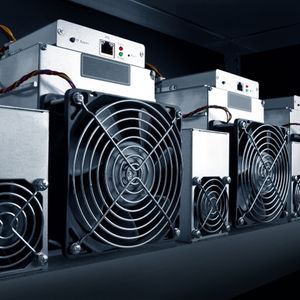
Summary BGIN Blockchain shifts focus to a 4nm Bitcoin mining ASIC, aiming for a more resilient market position. The BT1 chip's successful tape-out marks a strategic pivot, with potential for positive momentum if efficiency and pricing prove competitive. Competitive risks remain high, as BGIN lags top rivals in chip technology and faces significant cash burn and inventory overhang. Insider share purchases during the BT1 development phase signal management's commitment, but execution and liquidity risks persist. Last time I spoke about Bgin Blockchain Limited (BGIN), despite the Strong Sell outlook, mostly due to the bearish crypto market and the company's elevated exposure to altcoins, I concluded by saying that BGIN could be a really good stock to hold in a future crypto bull market due to its, at the time, intent to manufacture a Bitcoin mining ASIC. Since the last article, the stock price fell 25.6% compared to a flat S&P 500 change; Bitcoin ( BTC-USD ) fell about 25%, and Kaspa ( KAS-USD ) and ALEO , which are altcoins more related to the company, fell about 13% and 60%, respectively. While I am still strongly bearish on cryptos in general, the recent press release is something that could change the company's near-term outlook. In the last month, BGIN has experienced some positive momentum, which was certainly due to the MAR 16 press release , where the company announced a successful tape-out of a new 4-nanometer (nm) Bitcoin mining chip called BT1, which is an important shift in the company's strategy, directing it towards a more resilient market, and in my view, if they have success with this new mining chip, the stock could see some positive momentum, even in this bearish crypto market. BGIN designs and manufactures application-specific integrated circuits ((ASIC)). The company focused on manufacturing ASICs for altcoins like Kaspa, Aleo, and Alephium, and they are known for the ICERIVER ASICs, which have very good power consumption to performance ratios. The ICEREVERs were made with 8nm and 12nm chips, and as said before, the new Bitcoin ASIC will have a 4nm chip, which is an important technology jump for the company, but it is still lagging in comparison with top competitors, which are already seeking 3nm and 2nm for their newest ASIC models. Despite the comparison, BGIN still can achieve a solid efficiency, with a lower joules per terahash ratio (J/TH), which is one of the most important metrics for Bitcoin mining ASICs, given the current electricity demand increase of AI data centers pushing energy prices higher. The BT1 project is already past the initial stage, which is usually riskier and more expensive, and it is now in the testing phase. If the company successfully delivers a competitive ASIC, it could put this new model alongside the most cost-effective options in the market. Another positive is that BGIN chairman Oisin Li and its independent director, Paul Tsang, had purchased additional Class A ordinary shares of the Company in January, during the tape-out phase, in January 2026, which shows their commitment to this new step the company is taking. If it wasn't for this announcement, I would still hold on to my expectation of seeing falling Bitcoin prices pushing altcoins even lower until near the end of Q3 2026, which was usually the low of the cycle, and expect BGIN to also continue declining. But if their new ASICs deliver a strong performance, around 12-14 J/TH range. That would draw significant attention, and the stock could trade at higher multiples. Additionally, given that Bitcoin is more stable than altcoins, BGIN's operation could become profitable again, like in 2023 and 2024, when the company achieved about 54% and 21% net margins, respectively, and even if Bitcoin prices decline more, let's say, to $45,000, ASIC manufacturers continue to be profitable. Their break-even point would depend on many factors. In general, the lower the J/TH, the more efficiently the company can operate, allowing it to remain profitable even at lower Bitcoin prices. Model Manufacturer Efficiency (J/TH) Chip Technology Cooling BGIN BT1 BGIN Blockchain TBA 4nm TBA Avalon A16XP Canaan 12.8 5nm Air Avalon A16 Canaan 13.8 5nm Air Antminer S21 Pro Bitmain 15 5nm Air WhatsMiner M60S++ MicroBT 15.9 5nm Air Hashivo B1 Hashivo 11 4nm Hydro On the downside, the Bitcoin ASIC market is very competitive, with the likes of Bitmain and MicroBT, which are the companies partnering with the largest Bitcoin farms, with bigger teams and deeper pockets. To compete, BGIN must reveal a really good product with a reasonable price. BGIN seems to be moving in the right direction, mentioning "rigorous cost control" in the press release. But if they fail to do so, their cash position on the balance sheet is really small, at $23.9 million as of JUN 2025, while cash from operations averages about negative $50 million every 6 months, and on the income statement, earnings from continuous operations are also negative, at $30.2 million. Meaning that the company might run out of cash and may have to dilute shareholders or incur debt to continue operations. Another risk is the inventory, which was pretty high at JUN 2025, valued at $23.4 million, during peak optimism in the crypto market, and we can just hope they have sold their inventory instead of fully replenishing it before this crypto bear market. We also don't know when the company will finish testing, release important data, and start production. It may take 3-6 months, and in the meantime, the altcoin market is melting, and demand for BGIN's altcoin ASICs is extremely low. We also may not be at the market bottom; even if the new ASICs are competitive, crypto prices may decline further, putting more downward pressure on the stock. To conclude, BGIN has no room for error. The company is already low in cash, while altcoin prices are really low and may continue declining. Bitcoin prices may also continue declining, but if the next Bitcoin ASIC, BT1, achieves efficiency in the 12-14 J/TH range, that would place it within the competitive range of current-generation ASICs, improving the company's financial prospects. There is a chance the stock will react positively, even with a bearish crypto outlook. Conversely, if their new ASIC isn't competitive enough, above 16 J/TH, it would likely limit adoption and weaken the investment case, and it could accentuate the stock decline. Given the upside potential, instead of a strong sell, I now view the stock as a "Hold".