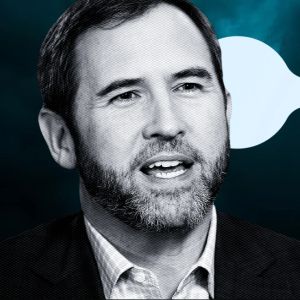
Ripple CEO Brad Garlinghouse said he has never been an XRP maximalist and that he wants Bitcoin to succeed. He added that crypto tribalism is bad for the entire industry. Garlinghouse spoke during an interview at Consensus Miami 2026 , while a new Ripple-backed company, Evernorth, hired Ripple’s top lawyer to its board and announced plans to go public on Nasdaq on the same day. The XRP maximalist and why Garlinghouse is not one An XRP maximalist, or “XRP maxi,” is a person who thinks XRP is the only important crypto in the industry. They want XRP to win and all others to lose, so they treat the market like a competition. Garlinghouse said he thinks differently. “I’ve never been an XRP maxi. It’s not gonna be a one-chain world. It’s gonna be a multi-chain world. I want to see Bitcoin be successful,” he said, adding that crypto tribalism is bad for everyone and the whole industry. In January 2025, Garlinghouse posted on X , saying maximalism is “the enemy of crypto progress” and that he owns XRP, Bitcoin, and Ethereum, because he supports a level playing field. He did make clear that XRP remains Ripple’s “North Star” and that every acquisition and new product aims to make the token more useful for the people. What does Ripple’s survey show about the finance world with digital assets? According to a Ripple survey of more than 1,000 finance leaders worldwide, 72% said companies must now offer digital asset solutions to remain competitive. 74% of the interviewees also said stablecoins are the future treasury tool that companies can use to manage money more efficiently. The survey also showed that 97% of finance leaders prioritize the security of digital assets over all other features, with certifications such as ISO and SOC being highly important. 88% ranked Post-integration technical support second, 80% said Industry experience came third, and 71% said they prefer an all-in-one service provider. The survey also found that 31% of fintechs collect payments in stablecoins on behalf of their customers, and 29% take stablecoin payments directly. 47% of fintech companies are more likely to build their own solutions in-house, compared with 14% of large corporations, which choose to work with established partners. Is Ripple using AI to fire people or to hire more of them? Garlinghouse said Ripple is using AI to grow and employ more people, and not to cut jobs. He said AI tools write or assist with 75% of Ripple’s code, and the company is using that gain to build more products that reach more users. “Painting AI as the boogeyman is a travesty. We’re not thinking about AI as a tool to reduce headcount. We’re thinking about it as an unlock,” Garlinghouse said. That’s contrary to what other companies are doing with AI. Coinbase cut 14% of its workforce in early 2026, blaming an AI shift and unfavorable market conditions. Klarna did the same thing and froze hiring in 2025 , saying its AI system could handle the job of 700 customer service employees. Atlassian wasn’t left behind, as it cut 1,600 jobs in March 2026 as part of an AI-driven restructuring. But according to Garlinghouse, companies using AI as an excuse to justify layoffs may be hiding bigger management issues behind the technology. Why did Garlinghouse say the next two weeks are critical with the CLARITY Act? The Securities and Exchange Commission (SEC) and the Commodity Futures Trading Commission (CFTC) differ on whether to classify crypto tokens as commodities or securities, and the CLARITY Act would resolve that. According to Congress.gov, the official US legislative record , the bill would keep investment-style tokens under the SEC and give the CFTC exclusive control over spot markets for digital commodities. In other words, it would make it easier for crypto companies like Ripple to know which rules apply to them. In July 2025 , the bill passed the House by a 294-134 vote, but the Senate seems to be taking its time. The biggest delay has been a fight over stablecoins between banks and crypto companies. Banks are against crypto companies offering users rewards for holding stablecoins because it would compete with bank deposits. Senators Thom Tillis and Angela Alsobrooks released a compromise on May 1, 2026, that bans stablecoin yield on deposits but allows it for platform activity. To that, Brad Garlinghouse commented. “Do I think it’s perfect? Hell no! But clarity is better than chaos. If it doesn’t happen in the next two weeks, I think the likelihood is going to drop precipitously.” What is Evernorth, and why is its stock market listing significant for XRP? Evernorth is the world’s largest XRP treasury company, and according to its official press release on May 5, 2026 , it holds more than 473 million XRP, backed by Ripple and SBI Holdings. The company appointed four new board members, including Ripple’s own Chief Legal Officer, Stuart Alderoty. That’s what put Evernorth in the spotlight. Having Ripple’s top lawyer on the board of a publicly listed XRP company ties the two organizations closely together. Evernorth is also building something similar to what Strategy has done for Bitcoin. Investors can participate in Bitcoin’s growth through its shares without buying Bitcoin directly, and Evernorth wants the same thing for XRP. The filing is under SEC review, and the final Nasdaq listing will be completed through a merger with Armada Acquisition Corp. II, a shell company already listed on the exchange. Don’t just read crypto news. Understand it. Subscribe to our newsletter. It's free .